Beyond the Eiffel Tower and the Louvre, there are a lot of secrets in Paris. It can be explained as secret subterranean galleries or little-know courtyards, quirky museums, and offbeat artisanal places that provide an authentically Parisian experience devoid of tourists. Find art where you didn't think to look, historical unusualities, and local bars that the publishers did not realize. Tour seven different places that show a very different aspect of Paris.
Musee des Egouts de Paris (Paris Sewers Museum)
Beneath the elegant boulevards runs a fascinating network of tunnels that played a crucial role in transforming Paris from a disease-ridden medieval city into a modern metropolis. The Paris Sewers Museum takes you underground to explore this engineering marvel that most people prefer to forget exists.
Looking inside the very sewer tunnels, you will know that the construction of this waste system was a part of urban planning implemented by the Baron Haussmann himself in the 19th century. The museum displays the tools, equipment and methods that sewer workers used over time. You will even find out how these tunnels became known courtesy of Victor Hugo and Les Miserables, when Jean Valjean took Marius through these tunnels.
The adventure is surreal as you are literally walking through working sewers whilst being informed about the covert infrastructure of the city of Paris. The museum is well-ventilated, and you need not fear that you will be smothered by the bad odor.
Pere Lachaise Cemetery's Hidden Corners
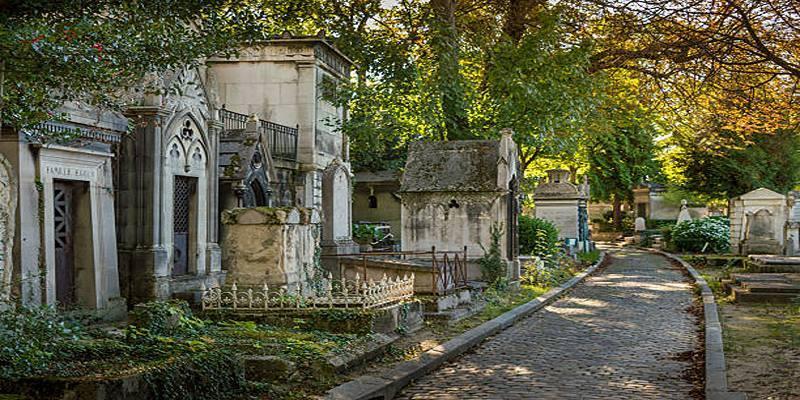
Most visitors may quickly make the way to the grave of Jim Morrison or to the tomb of Oscar Wilde; however, Père Lachaise contains many curious and beautiful secrets in the quieter areas of the cemetery. The giant cemetery is a historical library and gallery of sculpture in the open air.
Locate the tomb of Victor Noir, whose statue is made of bronze, and has gained an odd shininess due to decades of visitors rubbing particular areas of it. The Columbarium contains thousands of urns in a kind of underground city of the dead, with its narrow streets and little addresses.
Even the Monument to the Dead should not be overlooked, as it is where you are likely to come across the sculptures which appear like coming out of the cemetery walls. The older parts have detailed tombs which resemble small Gothic cathedrals rather than graves.
Musee de la Chasse et de la Nature
This hunting and nature museum presents one of Paris's most controversial and thought-provoking collections. The museum is situated in two beautiful 17th-century mansions, where people are bound to ask themselves about their relationship with nature.
There is a blend of taxidermy animals, modern art installations, and historical hunting tools throughout, which is simultaneously beautiful and disturbing. You may find a polar bear in a fancy ballroom or in modern representations of predator-prey dynamics by artists painted side by side with ancient guns.
The attitude of the museum is provocative. Instead of just being a scene of celebration or censure about hunting, it raises convoluted issues about conservation and tradition and our belonging to the natural world. The theme of how people treat wildlife is approached differently in each of the rooms.
Passage des Panoramas and Its Hidden Galleries
Completed in 1800 Passage des Panoramas is one of the earliest covered walking arcades in Paris, although its true beauty is the network of smaller walks taking off on the main line. Stamp dealers, retro postcard dealers, and small restaurants that locals used over the decades can be found in these small aisles.
The panoramas that led to the name of the passage are long since obsolete, though the space does have its genuine 19th-century air about it. Some areas are still lighted by gas lamps, and the heavy sheet of glass will provide forms of light that vary during the day.
Explore cross street (passageways) to visit exclusive stores that are not located any other place in Paris. Rare stamps such as treasures are displayed by philatelic sellers, small outlets sell genuine French food in bistros. The passages are linked to a network that is not visible, each of which has its charm, history, and character.
The Wall of Love (Mur des Je t'aime)
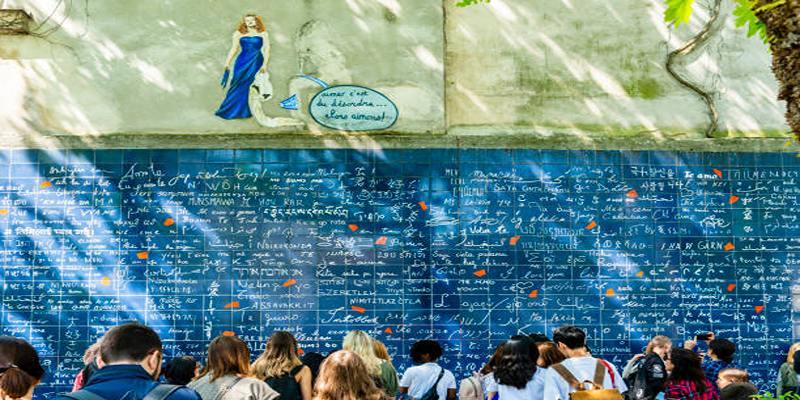
Located in a small park in Montmartre, this modern artwork enables you to see on 612 blue tiles and 250 different languages the words I love you. The wall, designed by calligrapher Frédéric Baron and artist Claire Kito, is a piece of work that turns a mere sentence into an intense sentence concerning human unity.
All of the languages are spoken by people of various cultures and belong to the common to almost extinct category. Red dots that are randomly placed on the wall are to denote fragments of broken hearts and the design of the entire wall is to heal with the universal language of love.
The local Jehan Rictus Square offers a calm environment in comparison with the crowded tourist locations of Montmartre. Children of the local residents are typically taken here to learn more about this or that culture, as well as couples of other nationalities come to look in the proclamations and find their native languages.
Musée des Arts Forains (Fairground Arts Museum)
This private museum houses an extraordinary collection of antique fairground rides, carnival games, and theatrical automatons in atmospheric 19th-century pavilions. The entire experience feels like stepping into a magical carnival from another era.
The Musée des Arts Forains is not as isolated as normal museums because people like to interact with each other there. The antique rides have remained in operation and in many cases, visitors can enjoy their entertainment the way it was more than 100 years ago. The antique horses in a carousel are carved out of wood by hand and have detailed and worn paint that tells their stories.
The museum also displays rare items such as steam-powered rides, fancy organ grinders and spectacular puppet demonstrations which used to traverse around Europe. Every one can be considered the work of art and art that transformed fairgrounds into community entertainment centres.
La Recyclerie
La Recyclerie is a cafe, restaurant and cultural venue constructed inside an old train station on the disused line of Petite Ceinture railway, specifically related to sustainable living. The venue symbolizes the creative attitude of Paris toward urban renewal and nature.
The room does not destroy the original architecture of the station, but incorporates new features built with recycled materials. In train cars that used to carry Parisians to the outskirts of the city you can have coffee. The external terrace extends along the former tracks of the railway, and thus forms a particular garden location at the heart of the city.
La Recyclerie focuses on urban gardening, upcycling and sustainable living activities. On-site farm shows us that food can be grown in cities and a repair restaurant teaches people how to repair instead of disposing of damaged things.
Final Thoughts
These seven secret gems highlight the little-known gems of Paris and present a pure insight into Parisian culture- both underground wonders plus environmental creativity. Don't hurry through them, make one or two trips, getting the full of them. Combine these locations with the landmarks around them to create a unique combination of traditional and innovative experiences. Go out for exploring and you can easily discover their secrets at your own speed.